Slavery from Islamic and Christian Perspectives
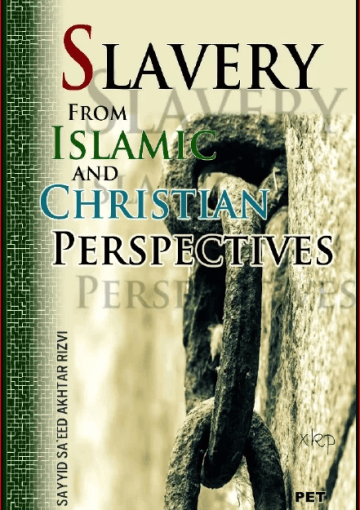
Slavery from Islamic and Christian Perspectives
Author :
Publisher :
Publish number :
First
Publication year :
1988
Number of volumes :
1
(0 Votes)

(0 Votes)
Slavery from Islamic and Christian Perspectives
In debates about historical injustices and religious teachings on human dignity, how do the Islamic and Christian traditions truly differ in their approaches to the institution of slavery, and what moral lessons can be drawn for contemporary discussions on freedom and equality?
About the Book
Slavery from Islamic and Christian Perspectives, written by Sayyid Saeed Akhtar Rizvi and published in 1988 by the Vancouver Islamic Educational Foundation, offers a thoughtful comparative analysis of the treatment of slavery within Islamic and Christian traditions. The book examines historical, scriptural, and ethical dimensions of the practice in both faiths, highlighting how Islam regulated and gradually encouraged the emancipation of slaves while emphasizing human dignity and justice. It contrasts these teachings with perspectives found in Christian history and scripture, aiming to clarify misconceptions and provide a balanced scholarly view on a sensitive topic that continues to influence interfaith and human rights discussions today.
What You Will Discover
- Historical context and regulation of slavery in early Islamic society according to the Qur’an and Sunnah
- Islamic principles that promoted manumission (freeing of slaves) as an act of piety and social justice
- Scriptural and historical attitudes toward slavery in Christian traditions
- Key differences in how the two faiths addressed the rights, treatment, and eventual abolition of slavery
- The emphasis on human dignity and equality in Islamic teachings despite the historical presence of slavery
- Moral and ethical lessons that can inform modern conversations on freedom and human rights
- A balanced comparison that avoids polemics while clarifying authentic religious positions
About the Author
Sayyid Saeed Akhtar Rizvi was a respected Shia scholar and author known for his clear, accessible writings on comparative religion and Islamic teachings, particularly those addressing questions relevant to Muslim communities in the West.
Who Is This Book For?
This book is ideal for students of comparative religion, researchers exploring historical slavery and ethics, Muslims and Christians interested in interfaith dialogue, and anyone seeking a thoughtful Islamic perspective on a complex historical and moral issue.