The Leadership (Walaya) of Imam Ali (as)
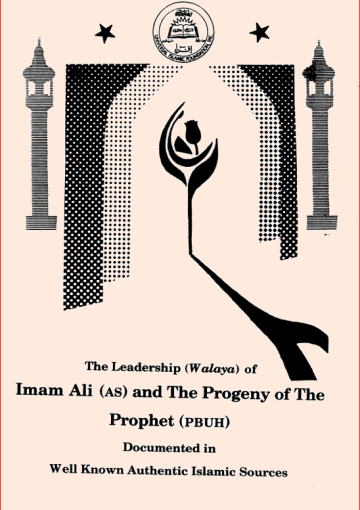
The Leadership (Walaya) of Imam Ali (as)
Author :
Publisher :
Publication year :
1991
Publish location :
U.S.A.
Number of volumes :
1
Publish number :
first
(0 Votes)

(0 Votes)
The Leadership (Walaya) of Imam Ali (as)
The principle of wilāyah (guardianship, divinely mandated leadership) lies at the heart of Islamic thought. The Leadership (Walaya) of Imam ʿAlī (ʿa) presents this concept through the life and mission of Imam ʿAlī ibn Abī Ṭālib (ʿa), whose leadership combined spiritual authority with just governance. His leadership was not abstract or symbolic. It was a lived reality that shaped the earliest Muslim community and continues to offer guidance today.
About the Book The Leadership (Walaya) of Imam ʿAlī (ʿa) was compiled by the UIF team and published in 1991 by the Universal Islamic Foundation, a U.S.-based religious and cultural institution. This first edition focuses on wilāyah as a defining principle of the Imamate. It emphasizes that Imam ʿAlī (ʿa), the first Imam of the Ahl al-Bayt (ʿa, an honorific meaning “peace be upon them”), was divinely appointed to lead both the spiritual and temporal affairs of the Muslim ummah. The book draws on Qurʾān exegesis, hadith (= prophetic tradition), and early historical writings to show how Imam ʿAlī’s (ʿa) authority was rooted in revelation, reason, and moral virtue. By highlighting his unique balance of faith and governance, the work presents wilāyah as essential to understanding Islamic leadership.
What You Will Discover
- Definition and scope of wilāyah as divinely sanctioned authority.
- Historical evidence supporting Imam ʿAlī’s (ʿa) leadership.
- Ethical principles guiding his governance and judgments.
- Relationship between revelation, intellect, and authority.
- Social and political effects of his guardianship.
- Balance of spiritual responsibility with public duty.
- Contemporary significance of his leadership model.
About the Author This book is the product of the UIF team (Universal Islamic Foundation). While individual authors are not named, the compilation reflects a scholarly approach rooted in classical sources. By analyzing Qurʾān commentary, hadith collections, and biographical accounts, the team presents a structured view of Imam ʿAlī’s (ʿa) leadership. Through this effort, the UIF preserves an important discussion of wilāyah for both academic and general audiences.
Who Is This Book For? This book is for students of Islamic theology and history, researchers of Shīʿah thought, and readers seeking to understand leadership in Islam through the example of Imam ʿAlī (ʿa).