A New Analysis of Wahhabi Doctrines
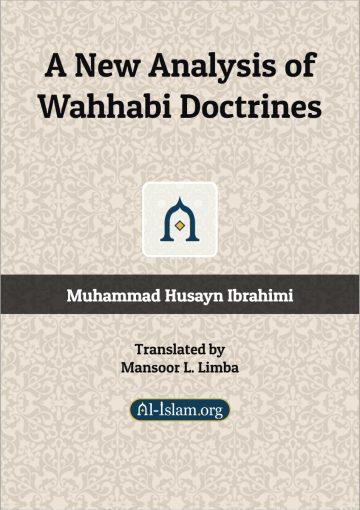
A New Analysis of Wahhabi Doctrines
Author :
Interpreter :
Publisher :
Publication year :
2007
Publish number :
First
Number of volumes :
1
ISBN :
1519137834, 9781519137838
(0 Votes)

(0 Votes)
A New Analysis of Wahhabi Doctrines
Debates about monotheism, religious visitation, and the interpretation of scripture have produced significant disagreements among Muslim scholars. This book examines selected Wahhabi doctrines and compares them with Sunni and Shīʿī understandings, presenting a critical analysis of practices and beliefs that remain subjects of theological controversy.
About the Book
A New Analysis of Wahhabi Doctrines by Muhammad Husayn Ibrahimi is a comparative theological study of the Wahhabi movement and its principal religious positions.
Translated into English by Mansoor Limba, the book was published by the ABWA Publishing and Printing Center in 2007.
The work begins with a summarized account of the life of Muḥammad ibn ʿAbd al-Wahhāb, the eighteenth-century religious reformer whose teachings became associated with the Wahhabi movement.
This historical introduction provides context for the subsequent examination of theological disagreements.
The author's central approach is comparative. He considers Wahhabi positions alongside teachings associated with Sunni and Shīʿī religious traditions.
One important subject is tawassul, the practice of seeking nearness to God through a means or intermediary.
The permissibility of particular forms of tawassul has been debated by Muslim scholars, especially where devotional practices involve the Prophet or other revered religious figures.
Another subject is ziyārah, the visitation of graves and religious sites.
Disagreements concerning ziyārah involve questions about religious legitimacy, the meaning of devotion, and the limits of practices associated with sacred places.
The book also addresses taʾwīl, the interpretation of scriptural passages beyond their immediately apparent meaning.
This subject is especially relevant to debates about divine attributes and the appropriate interpretation of Qurʾānic language.
Ibrahimi argues that certain Wahhabi positions depart from teachings accepted within other Muslim traditions.
That judgment represents the author's critical theological perspective rather than a conclusion universally accepted by Sunni and Shīʿī scholars.
The work's value lies in identifying specific doctrinal disagreements and presenting a structured critique of their underlying interpretations.
What You Will Discover
- The historical background of Muḥammad ibn ʿAbd al-Wahhāb.
- Comparisons between Wahhabi, Sunni, and Shīʿī teachings.
- Theological debates concerning tawassul.
- Disagreements about ziyārah and religious visitation.
- Questions involving taʾwīl and Qurʾānic interpretation.
- A critical assessment of selected Wahhabi doctrines.
Who Is This Book For?
This book is suitable for students of Islamic theology, researchers in modern Muslim religious movements, and readers examining differences among Islamic schools. It is particularly relevant to those interested in debates about devotional practices and scriptural interpretation.