Battle of Harrah
Battle of Harrah
Author :
Interpreter :
Publish number :
hirst
Publication year :
2006
Number of volumes :
1
(0 Votes)

(0 Votes)
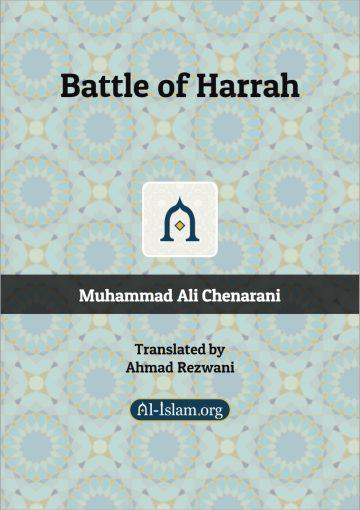
Battle of Harrah
The aftermath of Karbalāʾ did not silence the call for justice—it awakened new movements of conscience. Battle of Harrah examines one such pivotal episode in early Islamic history, when the people of Medina rose in defiance of tyranny, inspired by the moral example of Imam Ḥusayn (ʿa, an honorific meaning ʿalayhi al-salām — “peace be upon him”) and the tragedy of Karbalāʾ.
About the Book
Battle of Harrah presents a detailed account of the uprising that took place in Medina in 63 AH / 683 CE, just three years after the martyrdom of Imam Ḥusayn ibn ʿAlī (ʿa), the grandson of Prophet Muḥammad (peace be upon him and his Family). Led by the people of the Prophet’s city against the oppressive Umayyad rule, the rebellion at al-Ḥarrah was both a political and moral response to the injustices that had culminated in Karbalāʾ. The author connects the movement’s motivations to the enduring influence of Imam Ḥusayn’s (ʿa) revolution—its vision of iṣlāḥ (moral rectification), courage, and defense of truth (ḥaqq). Through careful historical analysis and moral reflection, the book situates this event within the broader legacy of the Ahl al-Bayt (ʿa, an honorific meaning ʿalayhim al-salām — “peace be upon them,” the Prophet’s Household), showing how the spiritual momentum of Karbalāʾ continued to shape Muslim resistance and reform.
What You Will Discover
- The historical background of the uprising at al-Ḥarrah and its connection to the tragedy of Karbalāʾ.
- The role of the Medinan community in confronting oppression and preserving the prophetic principles of justice (ʿadl).
- The influence of Imam Ḥusayn’s revolution as a moral catalyst for later movements of reform (iṣlāḥ).
- Eyewitness perspectives and early chronicles that record the spiritual and social dimensions of the event.
- Reflections on how the spirit of Karbalāʾ inspired continued resistance against tyranny throughout Islamic history.
About the Author
The author is a Muslim historian and researcher of early Islamic events who focuses on the political, ethical, and spiritual consequences of Imam Ḥusayn’s (ʿa) revolution. The author’s writing combines rigorous documentation with reflective commentary, presenting the Battle of al-Ḥarrah as both a historical tragedy and a moral continuation of Karbalāʾ’s light (nūr).
Who Is This Book For?
This book is for students, scholars, and readers seeking a historically grounded and morally insightful understanding of the events following Karbalāʾ—especially the uprising of Medina as a testament to faith, justice, and moral resistance.