Divine Revelation, Human Reason and Science
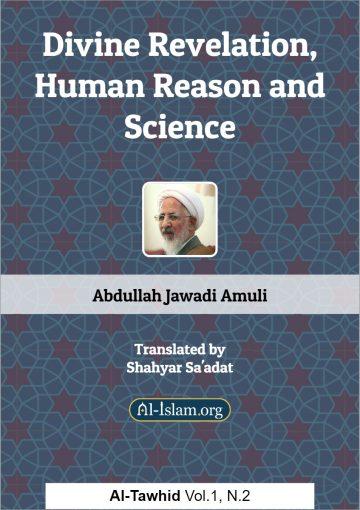
Divine Revelation, Human Reason and Science
Author :
Interpreter :
Publisher :
Publish number :
First
Publication year :
2014
Number of volumes :
1
(0 Votes)

(0 Votes)
Divine Revelation, Human Reason and Science
Human civilization has long grappled with the question of how divine revelation, rational thought, and empirical science relate to one another. Divine Revelation, Human Reason and Science enters this enduring debate with a calm, methodical voice, offering a framework in which these three sources of knowledge are neither confused nor placed in opposition, but understood according to their distinct roles and proper boundaries.
About the Book Divine Revelation, Human Reason and Science examines the epistemological foundations of knowledge from an Islamic perspective, addressing how revelation (waḥy — divine communication), human intellect (ʿaql — rational faculty), and scientific inquiry function together in the pursuit of truth. The book argues that conflict arises not from the nature of these sources themselves, but from misunderstanding their scope and authority.
The author explains that revelation provides metaphysical certainty, moral guidance, and ultimate meaning—areas beyond the reach of empirical experimentation. Human reason, meanwhile, acts as an indispensable tool for interpreting revelation, organizing knowledge, and evaluating evidence. Science, grounded in observation and experimentation, investigates the physical world and uncovers the laws governing creation. When each operates within its proper domain, harmony rather than contradiction emerges.
Drawing upon Qur’anic principles, classical Islamic scholarship, and philosophical analysis, the book demonstrates that Islam historically affirmed reason as a God-given capacity while recognizing its limits. Revelation does not negate reason; rather, it guides it. Likewise, science is presented not as a rival to faith, but as a disciplined method for exploring the material signs (āyāt — indicators pointing to God) embedded in the universe.
The work also critiques two modern extremes: scientism, which elevates empirical science into an all-encompassing worldview, and fideism, which dismisses rational and scientific inquiry in the name of faith. Both approaches, the author contends, distort the Islamic intellectual tradition and undermine genuine understanding.
Through clear distinctions and careful argumentation, Divine Revelation, Human Reason and Science offers readers a coherent model for integrating belief, intellect, and empirical knowledge without reducing one to another.
What You Will Discover
- The distinct epistemic roles of revelation, reason, and science.
- How Islam historically harmonized faith with rational inquiry.
- Why apparent conflicts between religion and science often arise.
- The limits of empirical science in addressing metaphysical questions.
- A principled Islamic response to scientism and anti-rationalism.
About the Author The author is a researcher in Islamic philosophy and theology, specializing in epistemology and the relationship between religion and science.
Who Is This Book For? This book is for readers seeking a disciplined, balanced, and intellectually rigorous approach to understanding how divine revelation, human reason, and scientific knowledge coexist within the Islamic worldview.