Let the Bible Speak
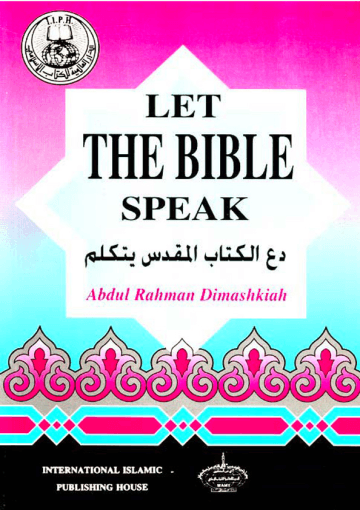
Let the Bible Speak
Author :
Publisher :
Publication year :
1997
Publish location :
Riyadh
Number of volumes :
1
ISBN :
9960-672-98-0
(0 Votes)

(0 Votes)
Let the Bible Speak
How should readers evaluate difficult passages in the Bible, particularly those concerning God, the prophets, and moral conduct? Let the Bible Speak presents a critical Islamic examination of selected biblical narratives, inviting readers to consider their theological implications.
About the Book
Let the Bible Speak was written by Abdur-Rahman Demashkiah and published by the International Islamic Publishing House in Riyadh in 1997. The catalogue records the ISBN 9960-672-98-0.
The book examines biblical passages that the author considers problematic from the standpoint of Islamic theology and moral expectations.
Its introduction identifies several categories of criticism.
The first concerns biblical descriptions that, in the author's judgment, attribute inappropriate characteristics to God.
The second involves narratives depicting prophets engaging in serious moral wrongdoing, including sexual misconduct and idolatry.
The author also objects to passages containing explicit descriptions of human behavior and to stories he considers unusual or difficult to reconcile with the dignity of divine revelation.
These concerns reflect an Islamic theological understanding in which God possesses absolute perfection and prophets occupy a position of exceptional religious responsibility.
The publication's method is critical and comparative. It evaluates selected biblical narratives according to the author's understanding of the qualities expected of authentic revelation.
However, the objections presented in the book should not be confused with conclusions accepted by biblical scholars or by Jewish and Christian religious traditions.
Different communities interpret these passages within distinct theological and literary frameworks.
The book is therefore best understood as a work of Muslim religious apologetics rather than a comprehensive historical-critical study of the Bible.
Its principal value lies in documenting a particular Islamic critique of biblical representations of God and the prophets.
What You Will Discover
- Islamic objections to selected biblical descriptions of God.
- Criticism of narratives concerning the conduct of prophets.
- Questions about morality and the characteristics of revelation.
- The author's examination of unusual biblical narratives.
- A comparative theological approach to biblical interpretation.
Who Is This Book For?
This book is suitable for students of comparative religion, researchers in Muslim-Christian apologetics, and readers interested in theological disagreements concerning biblical scripture.