Reciprocal Rights (Risalatu’l-Huquq)
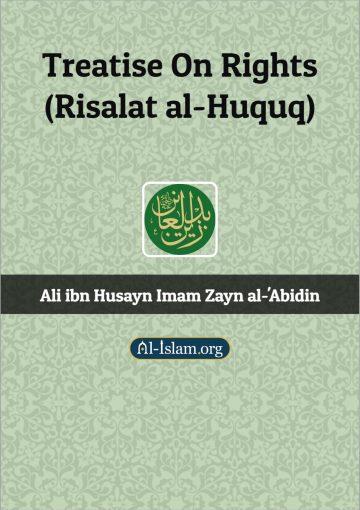
Reciprocal Rights (Risalatu’l-Huquq)
Author :
Interpreter :
Publication year :
1991
Publish number :
First revised
Publish location :
Tehran, Iran
Number of volumes :
1
(0 Votes)

(0 Votes)
Reciprocal Rights (Risalatu’l-Huquq)
Human relationships—between individuals, communities, and even the inner faculties of the self—are built upon rights and responsibilities. Few Islamic texts articulate this reality as profoundly as Risalatu’l-Huquq (Treatise on Rights: a comprehensive ethical document attributed to Imam Ali ibn al-Husayn, Zayn al-‘Abidin, outlining the rights owed to God, oneself, and others). Reciprocal Rights (Risalatu’l-Huquq) presents this timeless treatise in a clear, accessible format, allowing readers to understand the depth and universality of these rights in shaping moral character and social harmony.
About the Book Reciprocal Rights (Risalatu’l-Huquq) offers an organized and insightful introduction to one of the most significant ethical documents in Shi‘a tradition. Drawing from classical riwāyah (narrative transmission: preserved reports documenting sayings and teachings of the Imams) and early manuscripts, the book explains the structure and meaning of the treatise, which outlines over fifty distinct rights—from the rights of God, parents, children, neighbors, and teachers, to the rights of the body, actions, and intentions.
The text highlights how Imam Zayn al-‘Abidin (a.s) presented an integrated moral worldview in which spiritual obligations and social ethics are inseparable. By placing rights within the framework of gratitude, humility, justice, and compassion, the treatise elevates everyday interactions into opportunities for spiritual growth.
What You Will Discover
- A clear explanation of the origins and structure of Risalatu’l-Huquq.
- Insights into riwāyah (narrative transmission) preserving Imam Zayn al-‘Abidin’s teachings.
- An exploration of rights owed to God—worship, gratitude, sincerity, and obedience.
- Reflections on social rights: family, community, mentors, students, neighbors, and the vulnerable.
- A discussion of inner rights—those of the tongue, hands, feet, stomach, and intention—showing how ethics begins within the self.
- A thematic understanding of how fulfilling rights fosters humility, justice, emotional balance, and spiritual refinement.
- Practical lessons on applying these teachings to modern life, relationships, and personal discipline.
About the Author Drawing from authentic classical sources, ethical writings, and scholarly commentary, the author presents the treatise with clarity, respect, and pedagogical organization. The writing makes complex moral principles accessible while maintaining depth and reverence.
Who Is This Book For? This book is for readers seeking a spiritually rich, ethically comprehensive, and practically applicable introduction to the profound teachings of Risalatu’l-Huquq and its vision for human dignity and moral responsibility.