The Alhambra vol 1
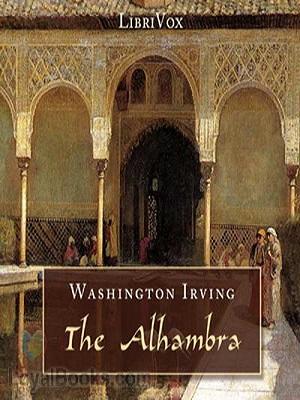
The Alhambra vol 1
Author :
Publication year :
1865
Number of volumes :
2
Publisher :
Publish number :
First
(0 Votes)

(0 Votes)
The Alhambra vol 1
What if a palace could speak—not only of kings and conquests, but of an entire civilization’s vision of beauty, power, and harmony? How can stone, water, and geometry preserve the memory of a lost world?
About the Book
The Alhambra (Vol 1) is a detailed historical and cultural exploration of the Alhambra palace complex in Granada, one of the most remarkable legacies of Islamic civilization in Europe. The book examines the architectural sophistication, artistic expression, and political significance of the monument within the broader context of al-Andalus. Rather than presenting the Alhambra as a static structure, it portrays it as a living space shaped by rulers, artisans, and evolving historical conditions. The narrative integrates historical documentation with descriptive analysis, offering insight into both the physical design and symbolic meaning of the site. Its importance lies in capturing not only the structure itself but also the intellectual and cultural environment that produced it. As a result, the book functions as both a historical account and an interpretive study of Islamic art and governance in medieval Spain.
What You Will Discover
- How the Alhambra was constructed, expanded, and modified across different ruling periods.
- What architectural principles, including symmetry, proportion, and water integration, define its design.
- How decorative elements such as calligraphy and geometric patterns reflect Islamic artistic ideals.
- What political and historical circumstances influenced its development and transformation.
- How the palace functioned as both a royal residence and an administrative center.
- What cultural and symbolic meanings are embedded in its spatial organization.
About the Author
Washington Irving was a renowned nineteenth-century writer known for his contributions to historical narrative and cultural interpretation. His engagement with Spanish history and personal residence in Granada allowed him to approach the Alhambra not only as a historian but also as an observer of its lived atmosphere. Irving’s work combines literary style with historical curiosity, making complex cultural subjects accessible without sacrificing depth.
Who Is This Book For?
This book is best suited for readers interested in Islamic architecture, medieval history, and the cultural legacy of al-Andalus, whether at an introductory or intermediate level.