The Kalam Cosmological Arguement
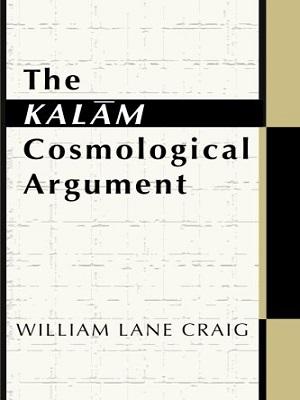
The Kalam Cosmological Arguement
Author :
Publication year :
1979
Number of volumes :
1
Publish number :
First
(0 Votes)

(0 Votes)
The Kalam Cosmological Arguement
Does the existence of the universe itself provide rational evidence for the existence of God, and how does the classical Kalam argument stand up to modern developments in philosophy, science, and theology?
About the Book
The Kalam Cosmological Argument, authored by William Lane Craig and published in 1979 by the World Organization for Islamic Services (WOFIS), offers a detailed philosophical examination of one of the most important traditional arguments for the existence of God. The Kalam cosmological argument, rooted in medieval Islamic theology but refined by Craig, posits that the universe had a beginning and therefore requires a transcendent cause. The book provides a broad assessment of the argument in light of contemporary developments in philosophy, mathematics, science, and theology, defending its logical soundness while addressing major objections.
What You Will Discover
- The historical roots and formulation of the Kalam cosmological argument in Islamic theology
- Philosophical reasoning showing why the universe must have a beginning
- The necessity of a transcendent, personal cause (God) for the beginning of the universe
- Responses to modern scientific and philosophical challenges, including issues from cosmology and mathematics
- Analysis of key premises such as the impossibility of an actual infinite regress
- Comparisons with other cosmological arguments and their strengths and weaknesses
- The continuing relevance of the Kalam argument in contemporary debates on the existence of God
About the Author
William Lane Craig is a prominent American philosopher and theologian known for his work in philosophy of religion and defense of the Kalam cosmological argument.
Who Is This Book For?
This book is ideal for students and researchers of philosophy of religion, Islamic theology, and apologetics, as well as anyone interested in rational arguments for the existence of God and their engagement with modern science.