The Making of Islamic Science
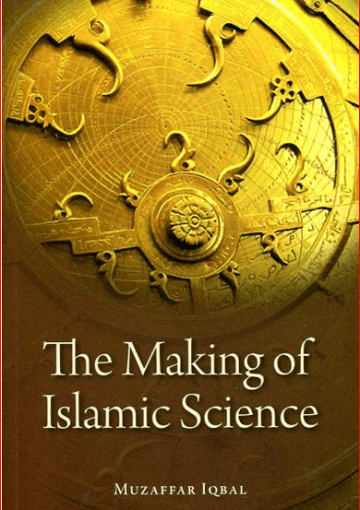
The Making of Islamic Science
Author :
Publisher :
Publication year :
2007
Publish number :
First
Publish location :
London
Number of volumes :
1
(0 Votes)

(0 Votes)
The Making of Islamic Science
Modern science did not emerge in isolation; it was shaped through centuries of intellectual transmission, cultural synthesis, and philosophical reflection. The Making of Islamic Science examines one of the most formative yet often misunderstood chapters in the history of scientific development.
About the Book The Making of Islamic Science investigates how science took shape within Islamic civilization, not merely as a collection of borrowed techniques, but as a distinct intellectual tradition grounded in Islamic metaphysics, epistemology, and values. The book challenges the reductionist view that Muslim scholars were only passive transmitters of Greek knowledge, instead demonstrating how they actively transformed, critiqued, and expanded earlier scientific traditions.
The author traces the integration of Qur’anic worldview, philosophical inquiry, and empirical observation in the formation of Islamic science. Attention is given to disciplines such as astronomy, medicine, mathematics, and natural philosophy, showing how scientific activity was embedded within a broader understanding of creation, order, and purpose. Science, in this context, is presented as a sacred pursuit aimed at understanding the ayat (signs pointing to divine wisdom) within the natural world.
What You Will Discover
- How Islamic science emerged as an integrated intellectual tradition.
- The role of Qur’anic worldview in shaping scientific inquiry.
- Contributions of Muslim scholars beyond translation and preservation.
- The interaction between philosophy, theology, and empirical science.
- Distinct features that differentiated Islamic science from later modern science.
- A historical framework for understanding science within Islamic civilization.
About the Author The author is a scholar of Islamic intellectual history with a focus on the philosophy and history of science. His work emphasizes conceptual clarity and historical accuracy, offering a critical reassessment of how Islamic science developed and why it matters.
Who Is This Book For? This book is for students, historians, and readers interested in the foundations of science within Islamic civilization and those seeking a deeper understanding of how worldview and knowledge are intrinsically connected.