Islamic Rules of Debate
Islamic Rules of Debate
Author :
Interpreter :
Publisher :
Publication year :
1994
Publish location :
Jeddah
Number of volumes :
1
(0 Votes)

(0 Votes)
Islamic Rules of Debate
Religious debate requires more than the ability to present arguments. It also involves evaluating evidence, recognizing assumptions, and responding to opposing claims responsibly. Throughout Islamic intellectual history, scholars have developed different approaches to defending religious teachings. This work addresses contemporary criticisms of Islam and the importance of answering them through reasoned argument.
About the Book
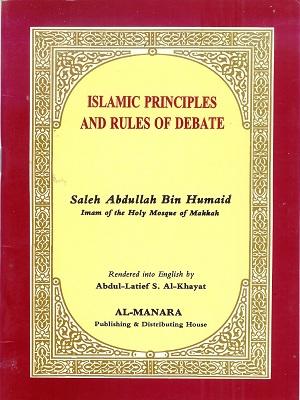
Islamic Rules of Debate is a work by Saleh Bin Abdullah Bin Humaid, translated into English by Abdul-Latief S. Al-Khayat.
The book examines allegations and criticisms directed against Islam, particularly those that have circulated repeatedly in different historical circumstances.
The author observes that some objections have appeared in new forms while retaining arguments familiar from earlier debates.
He also notes that contemporary criticisms may employ scientific or academic terminology to give older claims a different appearance.
The work recognizes that Muslim scholars have historically responded to such arguments through a variety of intellectual approaches.
Rather than dismissing those earlier contributions, the author acknowledges their role in defending Islamic teachings.
The stated objective of the book is to provide what the author considers verified and conclusive evidence concerning important allegations raised against Islam.
Particular attention is given to the circulation of religious criticism in the modern information environment.
The growth of internet communication has made competing religious claims more accessible to wider audiences.
This development creates opportunities for discussion but also increases the importance of distinguishing substantiated arguments from unsupported assertions.
The book approaches these concerns from an apologetic perspective, seeking to defend Islamic beliefs against criticism.
Its emphasis is therefore different from a neutral historical survey of religious debates.
The author is primarily concerned with the strength of evidence used in responding to objections.
This focus makes the work relevant to the study of contemporary Islamic apologetics and religious argumentation.
It also provides a basis for considering the responsibilities involved in presenting and evaluating claims about religion.
What You Will Discover
- Common allegations and criticisms directed against Islam.
- The historical repetition of religious objections.
- The importance of evidence in theological argument.
- Contemporary challenges associated with internet debates.
- The author's responses to selected criticisms.
- An introduction to Islamic apologetic reasoning.
Who Is This Book For?
This book is suitable for students of comparative religion, Islamic theology researchers, educators, and readers interested in religious debate. It is particularly relevant for examining how contemporary Muslim writers respond to criticisms of Islam and evaluate arguments concerning religious belief.