Intellectual Responses to Religious Pluralism
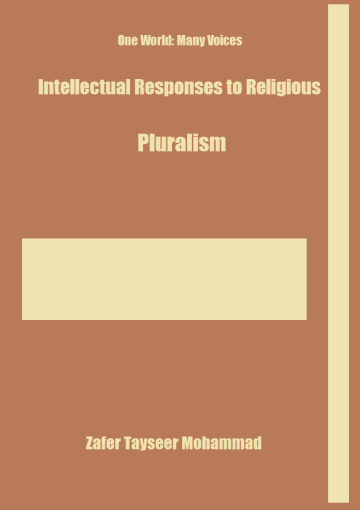
Intellectual Responses to Religious Pluralism
Author :
Publisher :
Publish number :
first
Publication year :
2015
Number of volumes :
1
(0 Votes)

(0 Votes)
Intellectual Responses to Religious Pluralism
Religious pluralism has become an important subject in contemporary debates about freedom, identity, and coexistence. Yet the recognition of diversity does not necessarily resolve disagreements between religious communities. This work examines the intellectual challenges surrounding pluralism and questions whether its optimistic promises correspond to social and political realities.
About the Book
Intellectual Responses to Religious Pluralism by Zafer Tayseer Mohammad explores the contemporary significance of religious pluralism and the difficulties associated with its interpretation.
Published through the alhassanain Cultural Network in 2015, the work begins by observing the increasing prominence of pluralism in modern intellectual discourse.
Its introductory passage refers to a 2001 editorial in the Bangladeshi newspaper Dainik Janakantha, which celebrates pluralism as an expression of freedom, difference, and human creativity.
The author uses this optimistic description as a starting point for a more critical examination.
Rather than accepting the celebration of pluralism without qualification, the discussion questions whether contemporary realities support such confidence.
This distinction is significant because pluralism can refer to several related but different ideas.
Religious diversity describes the existence of multiple religious traditions within a society. Religious pluralism may also involve philosophical arguments about religious truth, social recognition, and the legitimacy of differing beliefs.
The intellectual challenge is therefore not simply acknowledging that religions differ. It also involves examining how competing religious claims and social expectations are understood.
The publication's introduction establishes a critical perspective toward overly optimistic descriptions of pluralism.
However, the available catalogue excerpt does not identify the author's complete philosophical framework or the particular religious thinkers discussed.
Its confirmed focus is the contemporary debate surrounding pluralism and the gap between its idealized presentation and difficult social realities.
What You Will Discover
- The prominence of pluralism in contemporary intellectual discussion.
- The relationship between religious diversity and social freedom.
- Optimistic claims about pluralism and human creativity.
- Questions concerning the practical realities of coexistence.
- The distinction between celebrating diversity and examining its challenges.
- A critical perspective on contemporary pluralist discourse.
Who Is This Book For?
This work is suitable for students of comparative religion, researchers in religious philosophy, and readers interested in pluralism and interreligious relations. It is particularly relevant to those examining the relationship between religious diversity, intellectual freedom, and social conflict.