Islam and Science /Volume6
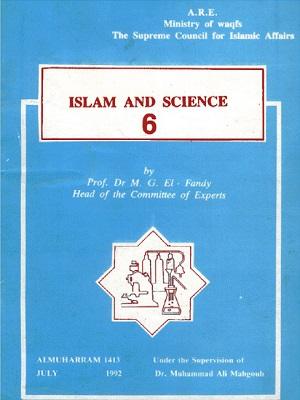
Islam and Science /Volume6
Author :
Publisher :
Publication year :
1992
Number of volumes :
7
Publish number :
First
(0 Votes)

(0 Votes)
Islam and Science /Volume6
Humanity’s expanding scientific power has intensified fundamental questions about meaning, ethics, and responsibility. Islam and Science /Volume6 addresses these concerns by examining how Islamic intellectual tradition evaluates scientific progress not merely by its technical success, but by its impact on human dignity, moral order, and spiritual awareness.
About the Book Islam and Science /Volume6 continues the analytical exploration of the relationship between Islamic worldview and modern scientific thought, with particular attention to the consequences of unchecked scientism. The book argues that while science is an indispensable tool for understanding the physical world, it becomes problematic when elevated to an all-encompassing philosophy that dismisses metaphysical and ethical dimensions.
Drawing on Qur’anic principles, this volume presents knowledge (ʿilm, understanding grounded in truth and responsibility) as inherently value-oriented. Scientific inquiry, when detached from divine guidance, risks reducing human beings to biological or mechanical entities. Islam, by contrast, views the universe as an ordered system of signs (āyāt, indicators pointing to divine wisdom), inviting reflection that leads beyond data to meaning.
What You Will Discover
- The limits of science as a purely material method of knowledge.
- How Islam differentiates between scientific method and scientific ideology.
- Qur’anic guidance on the ethical use of human knowledge and power.
- The spiritual consequences of reducing reality to matter alone.
- An Islamic critique of technological domination over human values.
- The role of faith in restoring balance between knowledge and wisdom.
About the Author The author is a researcher and writer engaged in addressing modern intellectual challenges through Islamic thought. With familiarity in both contemporary scientific discourse and classical Islamic philosophy, the author presents arguments that are methodical, critical, and rooted in primary religious sources.
Who Is This Book For? This book is for readers who wish to explore how Islam offers a principled framework for evaluating science, ensuring that progress serves humanity rather than undermines its moral and spiritual foundations.