Leading the Ummah
Leading the Ummah
Author :
Editor :
Interpreter :
Publisher :
Publication year :
2011
Publish number :
First
Publish location :
Qum, Iran
Number of volumes :
1
(0 Votes)

(0 Votes)
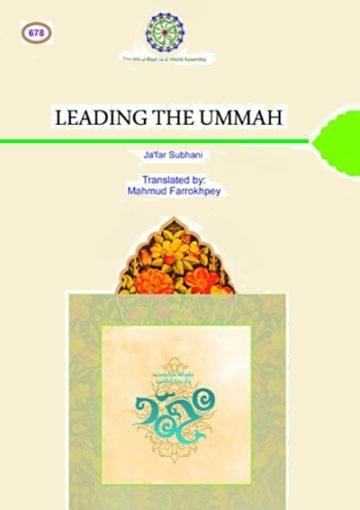
Leading the Ummah
Leadership occupies a vital place in Islamic thought, where those entrusted with responsibility are expected to guide their communities with justice, wisdom, knowledge, and sincere devotion to God. Effective leadership is presented not as a privilege but as a trust accompanied by accountability.
About the Book
Leading the Ummah examines the Islamic principles of leadership and their application within the Muslim community. Drawing upon the Qur'an, the Sunnah, Islamic history, and scholarly discussions, the book explores the qualities, responsibilities, and ethical standards expected of those who guide others.
The author discusses subjects such as leadership as a trust (amanah), justice, consultation (shura), knowledge, moral integrity, service to the community, accountability, decision-making, and the examples of the Prophet Muhammad (peace be upon him) and other exemplary leaders in Islamic history.
A major emphasis throughout the work is that successful leadership begins with personal integrity and sincere commitment to divine guidance. The book demonstrates how Islamic teachings encourage leaders to balance authority with humility, consultation, compassion, and justice. Through scriptural evidence, historical examples, and ethical reflection, readers gain a comprehensive understanding of leadership as a form of service rather than personal power.
The discussion also highlights the responsibilities of the wider Muslim community in supporting righteous leadership while maintaining justice, cooperation, and unity.
What You Will Discover
- Islamic principles of leadership.
- Leadership as trust and responsibility.
- Justice and consultation.
- Ethical decision-making.
- Examples from Islamic history.
- Serving the Muslim community.
Who Is This Book For?
This book is ideal for students of Islamic studies, community leaders, educators, researchers, and readers interested in Islamic leadership and governance.