Marriage According to Five Schools of Islamic Law/ Vol 5
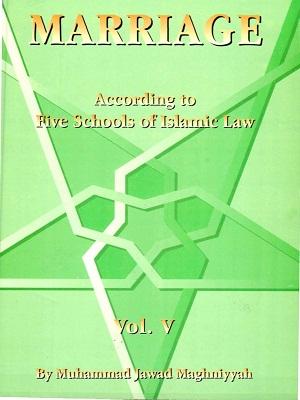
Marriage According to Five Schools of Islamic Law/ Vol 5
Author :
Publisher :
Publication year :
1997
Publish number :
First
Publish location :
Tehran, Iran
Number of volumes :
1
(0 Votes)

(0 Votes)
Marriage According to Five Schools of Islamic Law/ Vol 5
Marriage occupies a central place in Islamic law, serving as both a sacred covenant and a legal institution that safeguards individual rights, family stability, and social harmony. While the major schools of Islamic jurisprudence share common foundations, they also preserve distinct legal interpretations on various aspects of marital law.
About the Book
Marriage According to Five Schools of Islamic Law – Volume 5 presents a comparative study of Islamic marriage jurisprudence according to the five principal schools of Islamic law. Drawing upon the Qur'an, the Sunnah, and classical juristic works, the book examines areas of agreement and difference among the Ja'fari, Hanafi, Maliki, Shafi'i, and Hanbali traditions.
The author discusses subjects such as the marriage contract, conditions of validity, guardianship, dowry (mahr), mutual rights and obligations of spouses, divorce, maintenance, child custody, and related legal matters. By comparing scholarly opinions, readers gain a deeper appreciation of the breadth and flexibility of Islamic jurisprudence.
A major emphasis throughout the work is that legitimate juristic diversity reflects the richness of Islamic legal scholarship while remaining rooted in the primary sources of Islam. The book demonstrates how comparative fiqh enables readers to understand the reasoning behind different legal conclusions and encourages respectful engagement with diverse scholarly traditions. Through detailed legal analysis and textual evidence, readers acquire a comprehensive understanding of Islamic marriage law across multiple schools.
The discussion also highlights the practical relevance of comparative jurisprudence for students, researchers, and legal practitioners working within contemporary Muslim societies.
Scholarly and systematic, the book is an important reference for comparative Islamic family law.
What You Will Discover
- Comparative rulings on Islamic marriage.
- Legal opinions of the five schools.
- Marriage contracts and mahr.
- Rights and duties of spouses.
- Divorce and family law issues.
- Foundations of comparative fiqh.
Who Is This Book For?
This book is ideal for students of Islamic jurisprudence, researchers, legal scholars, educators, and readers interested in comparative Islamic law.