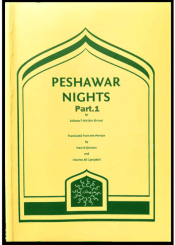
Peshawar Nights Part 2

Peshawar Nights Part 2
Author :
Publisher :
Publish number :
First
Publication year :
2008
Number of volumes :
2
(0 Votes)

(0 Votes)
Peshawar Nights Part 2
How do extended theological debates develop when scholars examine competing interpretations of Islamic history and religious authority? Peshawar Nights Part 2 continues the dialogue-based presentation associated with Sultanul-Waizin Shirazi, offering readers the concluding part of a two-volume work on major Sunni-Shīʿī disagreements.
About the Book
Peshawar Nights Part 2 was written by Sultanul-Waizin Shirazi and published by World Islamic Network in 2008.
The Islamic Sources catalogue identifies it as the second part of a two-volume publication.
The work presents dialogues between Sunni scholars and a Shīʿī author, examining religious questions that have contributed to historical disagreements within the Muslim community.
According to the catalogue, the complete publication addresses succession after Prophet Muḥammad (peace be upon him and his Family), the position of the Companions, infallibility, temporary marriage, and the religious significance of the Prophet's family.
These subjects reflect different approaches to the interpretation of Islamic history and religious sources.
Within Twelver Shīʿī thought, the doctrine of imāmah establishes a distinctive understanding of religious authority after the Prophet.
Sunni traditions developed different theological and historical explanations of succession and the caliphate.
The dialogue format allows competing positions to be presented through arguments and responses, although the work is written from a Shīʿī perspective.
Its value as a source therefore lies partly in showing how a Shīʿī author frames and defends particular theological claims.
Readers should distinguish those arguments from a neutral scholarly reconstruction of every position represented.
The catalogue provides the same general subject description for both volumes and does not identify which discussions are specific to Part 2.
It would consequently be inappropriate to claim that this volume begins with a particular controversy or reaches a particular conclusion without examining its complete text.
The publication is best understood as the continuation and completion of the two-part dialogue, providing access to a sustained Shīʿī presentation of contested questions in Islamic theology.
What You Will Discover
- The continuation of a Sunni-Shīʿī theological dialogue.
- Arguments concerning religious leadership and succession.
- Disagreements over the interpretation of early Islamic history.
- Questions involving infallibility and the Prophet's Companions.
- Debates concerning temporary marriage and the Ahl al-Bayt (ʿa).
- A Shīʿī perspective on longstanding doctrinal controversies.
Who Is This Book For?
This volume is suitable for readers who have studied Part 1, students of Islamic theology, and researchers interested in Sunni-Shīʿī debates, religious authority, and the interpretation of early Islamic history.