The Islamic Way of Thinking
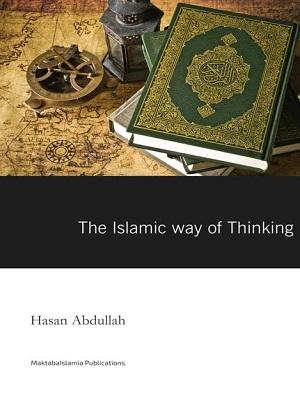
The Islamic Way of Thinking
Author :
Number of volumes :
-2
Publisher :
Publish number :
First
Publication year :
2007
(0 Votes)

(0 Votes)
The Islamic Way of Thinking
Does Islam influence only what a person believes, or does it also shape how that person thinks? The Islamic Way of Thinking investigates the relationship between religious conviction and intellectual activity, examining how Islamic beliefs may influence the interpretation of ideas, experiences, and human behavior.
About the Book
The Islamic Way of Thinking was written by Hasan Abdullah. The Islamic Sources catalogue records a first edition published in 2007 and identifies mohammad.islamway.com as the publisher.
The book begins by describing Islam as a distinctive ideology founded upon a particular ʿaqīdah, or system of belief.
According to the author's introduction, this foundational belief gives rise to a corresponding system of rules and principles.
The central question is whether the distinctive nature of Islamic belief also produces a distinctive way of thinking.
Abdullah recognizes that thinking is a universal human activity. People belonging to different religions and cultures all possess the capacity to reason, evaluate information, and form conclusions.
However, he argues that the beliefs adopted by individuals influence the intellectual framework through which they understand the world.
From this perspective, religious conviction does not merely supply answers to particular questions. It also contributes to the assumptions and standards used when examining new ideas.
The publication therefore connects Islamic theology with questions about intellectual formation.
Its subject is relevant to the study of religious epistemology, which examines the foundations, sources, and justification of knowledge.
It also raises questions about the relationship between universal human reasoning and the influence of cultural or religious commitments.
The author's presentation reflects a particular understanding of Islam as a comprehensive ideological system.
The catalogue excerpt does not establish the detailed reasoning methods or practical examples developed in the complete book.
Its verified focus is the relationship between Islamic belief and the intellectual framework through which Muslims approach knowledge and judgment.
What You Will Discover
- The meaning of ʿaqīdah as a foundation of Islamic thought.
- The author's understanding of Islam as a comprehensive ideology.
- The distinction between universal thinking and belief-shaped reasoning.
- The influence of religious convictions on intellectual perspectives.
- Questions concerning Islamic thought and the foundations of knowledge.
Who Is This Book For?
This book is suitable for students of Islamic intellectual thought, readers interested in religious philosophy, and researchers examining the relationship between belief systems, reasoning, and the formation of intellectual perspectives.