The Qur'an and its Translators
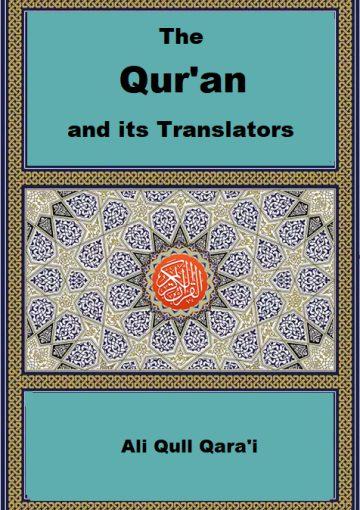
The Qur'an and its Translators
Author :
Publisher :
Publication year :
2006
Number of volumes :
1
Publish number :
first
(0 Votes)

(0 Votes)
The Qur'an and its Translators
Translating the Qur'an involves more than replacing Arabic words with equivalents from another language. Every translation must negotiate vocabulary, grammar, rhetoric, theological terminology, and cultural context. Examining different translators therefore reveals not only linguistic choices but also the interpretive assumptions that influence how readers encounter the Qur'an.
About the Book
The Qur'an and its Translators explores the complex relationship between the Arabic Qur'an and attempts to communicate its meanings through translation.
Within Islamic understanding, the Qur'an is inseparably associated with its revealed Arabic wording. A translation consequently represents an interpretation of meaning rather than a complete reproduction of every linguistic and rhetorical feature of the original.
This distinction becomes important when Arabic words possess several possible meanings or when grammatical structures allow nuances that cannot be transferred directly into English. Translators must choose among alternatives, and those decisions can influence how readers understand a passage.
Theological terminology presents another challenge. Words connected with God, worship, prophecy, law, and the Hereafter may carry conceptual associations that no single English equivalent captures completely.
Differences among translations can also reflect the translator's intellectual background, interpretive tradition, intended readership, and stylistic objectives. Comparing renderings therefore provides a useful method for recognizing places where interpretation enters the translation process.
The subject encourages readers to use translations critically rather than assuming that any single English version exhausts the meaning of the Arabic text. Consultation of commentary and comparison among translations can provide a fuller understanding.
The book consequently contributes to Qur'anic studies, translation studies, and reflection on how scripture crosses linguistic boundaries.
What You Will Discover
- Challenges involved in translating Qur'anic Arabic.
- Differences between translation and the original text.
- Interpretive choices made by Qur'an translators.
- Difficulties surrounding theological terminology.
- Reasons English translations may differ significantly.
- Methods for reading translated Qur'anic texts critically.
Who Is This Book For?
This book is suitable for Qur'anic studies students, translators, researchers, educators, comparative religion readers, and anyone interested in how linguistic and interpretive choices shape translations of the Qur'an.