Wahhabism, At the Crossroads
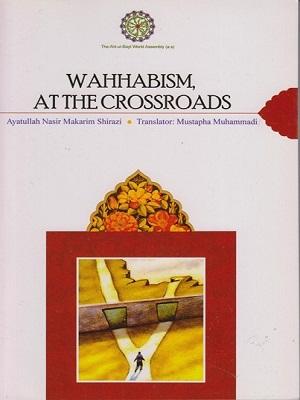
Wahhabism, At the Crossroads
Author :
Interpreter :
Publisher :
Publication year :
2011
Publish number :
First
Publish location :
Iran
Number of volumes :
1
(0 Votes)

(0 Votes)
Wahhabism, At the Crossroads
Religious disagreements within Islam sometimes concern the boundaries of belief, the treatment of other Muslim communities, and the legitimacy of particular devotional practices. This book examines contrasting tendencies within Wahhabi and Salafi thought, arguing that dialogue offers an alternative to exclusionary religious interpretations.
About the Book
Wahhabism, At the Crossroads by Ayatollah Naser Makarem Shirazi examines what the author describes as two contrasting tendencies within Wahhabism: extremist and moderate.
The English translation was prepared by Mustapha Muhammadi and published by the Ahl al-Bayt World Assembly in 2011.
Makarem Shirazi characterizes extremist tendencies through their readiness to accuse other Muslims of disbelief or polytheism and their rejection of constructive theological discussion.
By contrast, he describes moderate tendencies as more receptive to reasoned debate and respectful relations with other Muslim scholars.
This distinction provides the framework for the book's examination of contemporary religious disagreements.
A central issue is takfīr, the declaration that another person or community has departed from Islam.
The author criticizes expansive applications of takfīr and argues against the use of theological disagreement to justify hostility toward other Muslims.
The work also addresses disputes concerning reverence for Prophet Muḥammad (peace be upon him and his Family), seeking blessings through objects associated with him, and visiting his grave.
Other discussions concern the commemoration of significant events in Islamic history and the question of whether particular religious customs constitute prohibited innovations.
Makarem Shirazi refers to Qurʾānic passages, transmitted traditions, and scholarly arguments in examining these controversies.
His treatment represents a critical Shīʿī perspective on selected Wahhabi and Salafi interpretations. Its distinction between moderate and extremist tendencies is the author's analytical framework and should not be treated as a comprehensive classification of every person associated with these movements.
What You Will Discover
- The author's distinction between extremist and moderate tendencies.
- The theological and social consequences of takfīr.
- Arguments concerning dialogue between Muslim scholars.
- Debates about seeking blessings through Prophetic relics.
- Questions surrounding visits to the Prophet's grave.
- Disagreements concerning religious commemorations and innovation.
Who Is This Book For?
This book is suitable for students of Islamic theology, researchers in contemporary Muslim religious movements, and readers interested in debates about religious authority and communal relations. It is particularly relevant to those examining criticisms of extremist interpretations within modern Islamic thought.