Islam and Nationalism
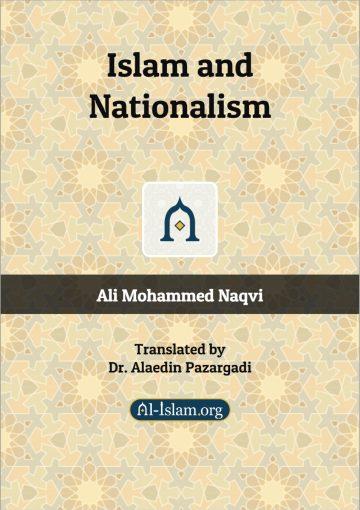
Islam and Nationalism
Author :
Interpreter :
Publisher :
Publication year :
1998
Publish number :
First
Publish location :
Iran
Number of volumes :
1
(0 Votes)

(0 Votes)
Islam and Nationalism
Can loyalty to a nation coexist with commitment to a religious community that extends beyond national boundaries? This question has shaped important debates in modern Muslim political thought. This book examines the relationship between Islam and nationalism, considering both their compatibility and the historical development of nationalist movements in Muslim societies.
About the Book
Islam and Nationalism by Dr. Ali Muhammad Naqavi is an analytical study of the relationship between Islamic religious identity and modern nationalism.
The English edition identifies Alaedin Pazargadi as its translator.
The work addresses a central question: whether an individual can remain a committed Muslim while also identifying as a faithful nationalist.
This question involves different understandings of political loyalty and collective identity.
Islam emphasizes membership in a religious community connected through shared beliefs and practices. Nationalism, by contrast, generally organizes political identity around a nation, its history, and its perceived collective interests.
The relationship between these forms of belonging has been debated extensively in modern Muslim societies.
Naqavi's study examines how far Islamic principles and nationalist commitments can be reconciled.
The book also investigates the historical emergence and spread of nationalism in Islamic countries.
This historical dimension is important because nationalism developed under different political and social circumstances across the Muslim world.
The study therefore considers nationalism not merely as an abstract political theory but as a movement with a particular historical development.
The available catalogue description establishes the book's two principal concerns: the compatibility of Islam and nationalism, and the historical expansion of nationalist ideas among Muslim populations.
It does not, however, provide sufficient detail to establish the author's conclusions on every aspect of this relationship.
The work is consequently best approached as a focused contribution to debates about religious identity, national belonging, and modern political thought.
What You Will Discover
- The relationship between Islamic identity and nationalism.
- Questions concerning religious and national loyalty.
- The compatibility of Muslim belief with nationalist commitments.
- The historical emergence of nationalism in Muslim societies.
- The spread of nationalist movements across Islamic countries.
- An analytical approach to a major issue in modern Muslim political thought.
Who Is This Book For?
This book is suitable for students of Islamic political thought, historians of modern Muslim societies, and researchers examining religion and national identity. It is especially relevant to readers interested in the relationship between religious commitments and modern political movements.