Islam and Religious Pluralism
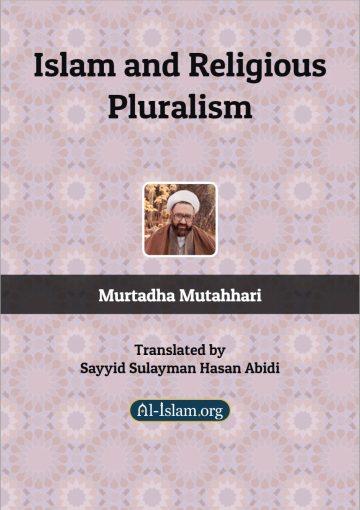
Islam and Religious Pluralism
Author :
Interpreter :
Publisher :
Publish location :
Canada
Number of volumes :
1
(0 Votes)

(0 Votes)
Islam and Religious Pluralism
Can different religions offer equally valid paths to salvation, or does religious truth require distinctions between competing beliefs? This question lies at the heart of contemporary debates about religious pluralism. The present publication approaches the issue through Islamic theological concerns and the philosophical arguments associated with modern pluralist thought.
About the Book
Islam and Religious Pluralism is catalogued under the name of Morteza Motahhari, with Sayyid Sulayman Ali Hasan identified as translator.
The catalogue lists Islamic Publishing House in Canada as publisher but does not provide a publication year.
An important distinction is necessary when examining this edition. Its opening description refers to religious lectures delivered in Brampton, Canada, and discusses the philosophical pluralism associated with John Hick.
These introductory remarks should not automatically be attributed to Motahhari. The precise relationship between the original work, its translation, and the accompanying introductory material requires examination of the complete publication.
The central subject is religious pluralism, particularly the claim that different religions may provide equally valid paths to ultimate salvation.
This philosophical position raises questions about religious truth, divine justice, and the destiny of people who follow different faiths.
The introduction illustrates the problem through a question about Mother Teresa and whether a morally admirable non-Muslim might attain salvation.
This example connects an abstract philosophical debate with a concrete theological concern.
The discussion also refers to the historical development of religious pluralism and its relationship with European political liberalism.
John Hick's influential approach is presented as an important reference point in modern philosophical discussions of religious diversity.
The publication's critical perspective challenges the assumption that all religions can simply be regarded as interchangeable routes to the same ultimate destination.
At the same time, Islamic discussions of salvation require careful distinctions between theological truth, individual responsibility, and divine judgment.
The book is therefore relevant to both comparative theology and the philosophy of religion.
What You Will Discover
- The philosophical meaning of religious pluralism.
- Questions concerning salvation outside one's religious tradition.
- The relationship between religious truth and moral responsibility.
- John Hick's influence on modern pluralist thought.
- Historical connections between pluralism and political liberalism.
- Islamic theological concerns about competing religious claims.
Who Is This Book For?
This book is suitable for students of Islamic theology, researchers in the philosophy of religion, and readers interested in interreligious dialogue. It is particularly valuable for examining how Muslim thinkers engage with contemporary arguments about religious diversity and salvation.