Islam in the 21st Century
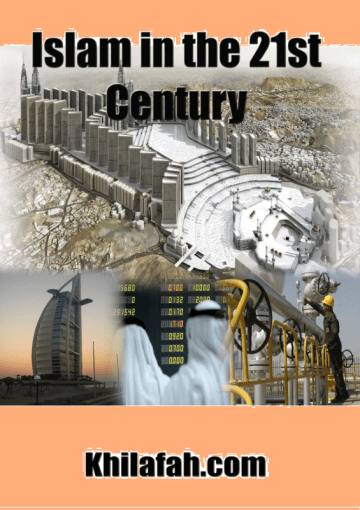
Islam in the 21st Century
Author :
Publication year :
2009
Number of volumes :
1
Publisher :
Publish number :
first
(0 Votes)

(0 Votes)
Islam in the 21st Century
How should Muslims respond to modern criticism of Islamic beliefs, practices, and legal institutions? Islam in the 21st Century examines the position of Islam in contemporary public debate, particularly the relationship between Islamic law, secular political systems, and Western representations of Muslim societies.
About the Book
Islam in the 21st Century was written by Adnan Khan and Zaynab Ismail and published by Al-Khilafah Publications in 2009. The catalogue identifies it as a first-edition, single-volume work.
The book begins by discussing the heightened scrutiny of Islam following the attacks of September 11, 2001, and the London bombings of July 7, 2005.
Its authors argue that Islamic beliefs and practices became subjects of increasingly intense criticism within Western political and media discourse.
The introduction refers specifically to controversies surrounding depictions of Prophet Muḥammad (peace be upon him and his Family) and restrictions on the wearing of the hijab in France.
The authors interpret these developments as part of a broader challenge to Islam's place in modern society.
Their concern extends beyond individual religious practices to the position of Sharīʿah, the Islamic legal and ethical tradition.
The book questions representations of Islamic law that emphasize corporal punishment while neglecting other aspects of its religious and social framework.
It also examines the relationship between Islamic legislation and the modern political order.
The publication's perspective reflects a particular political interpretation of Islam, especially concerning the role of Islamic governance.
Its criticism of secular institutions and Western discourse should therefore be understood as the authors' argument rather than an uncontested description of contemporary societies.
The work is relevant to debates about religious identity, political authority, and the relationship between Islam and modernity.
What You Will Discover
- Debates about Islam following September 11 and July 7.
- Controversies concerning religious expression in Western societies.
- The authors' criticism of representations of Sharīʿah.
- Questions about Islamic law and modern political institutions.
- A contemporary Islamic political perspective on religion and secularism.Who Is This Book For?
This book is suitable for students of contemporary Islamic political thought, researchers in religion and secularism, and readers interested in debates concerning Islamic law, identity, and modern governance.