Man in Qur’an
Man in Qur’an
Author :
Publisher :
Publish location :
U.S.A
Number of volumes :
1
Publish number :
first
Publication year :
1982
(0 Votes)

(0 Votes)
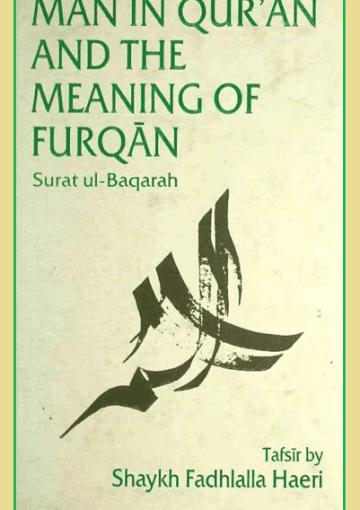
Man in Qur’an
What does the Qur'an say about the nature of the human being? Its descriptions are strikingly multidimensional. Humanity is presented as honored and capable of knowledge, moral growth, and responsibility, yet also vulnerable to forgetfulness, impatience, pride, and wrongdoing. Understanding these contrasting qualities provides an important foundation for Qur'anic anthropology and ethics.
About the Book
Man in Qur’an examines the human being from the perspective of the Holy Qur'an, exploring human origin, nature, capacities, responsibilities, weaknesses, and ultimate destiny. Rather than reducing humanity to a purely biological or material existence, the Qur'anic perspective places human life within a broader spiritual and moral framework.
The creation of humanity forms an important starting point. Qur'anic passages concerning Adam and the origin of human beings emphasize dependence upon God while also highlighting distinctive human capacities such as knowledge, choice, and moral responsibility.
Human dignity represents another central theme. The Qur'an speaks of the honor granted to the children of Adam and describes human beings as possessing capacities that enable them to learn, develop, choose, and act responsibly. Such potential, however, does not guarantee moral excellence.
The Qur'an also provides a realistic account of human weakness. People can become impatient, ungrateful, arrogant, forgetful, attached to material possessions, and susceptible to temptation. These tendencies help explain why revelation, spiritual discipline, repentance, and ethical education are necessary.
Freedom and accountability are closely connected. Human beings make meaningful choices and are responsible for the consequences of their actions. Earthly life consequently becomes a setting for moral development and testing rather than an existence without ultimate purpose.
The book ultimately presents the human being as a creature capable of both elevation and decline, whose destiny is shaped by faith, knowledge, choices, and conduct.
What You Will Discover
- Qur'anic teachings concerning human creation.
- The meaning of human dignity.
- Intellectual and spiritual capacities.
- Human weaknesses and moral challenges.
- Freedom, choice, and responsibility.
- The ultimate destiny of human beings.
Who Is This Book For?
This book is suitable for students of Qur'anic studies, Islamic philosophy, theology, ethics, anthropology, educators, researchers, and readers interested in the Qur'anic understanding of human nature and purpose.