A Study of Polytheism and Idolatry in the Qur’an
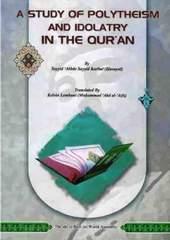
A Study of Polytheism and Idolatry in the Qur’an
Interpreter :
Publisher :
Publish number :
First
Publication year :
1995
Number of volumes :
1
ISBN :
1312538643, 9781312538641
(0 Votes)

(0 Votes)
A Study of Polytheism and Idolatry in the Qur’an
The Qur'an places tawhid, the absolute oneness of God, at the center of its religious worldview and consistently presents shirk, associating partners with God, as its fundamental theological opposite. Understanding the Qur'anic critique of polytheism therefore provides insight not only into ancient idolatry but also into the broader meaning of worship, dependence, authority, and devotion.
About the Book
A Study of Polytheism and Idolatry in the Qur’an examines the concepts of polytheism and idol worship through Qur'anic teachings. The work explores why the Qur'an rejects shirk, the different forms it can assume, and how its critique relates to the Islamic understanding of God and human responsibility.
The Qur'an repeatedly challenges the worship of created beings and objects. Its arguments direct attention toward creation itself: beings that possess no independent power to create, sustain life, or control ultimate destiny cannot legitimately occupy the position belonging to God.
The study also demonstrates that Qur'anic discussions of shirk extend beyond physical idols. The deeper theological issue concerns assigning divine status, authority, or devotion to something other than God. This makes the subject relevant to broader questions concerning dependence, obedience, and religious loyalty.
Prophetic narratives provide important examples. Abraham's opposition to idolatry and the struggles of other prophets against the religious assumptions of their societies illustrate the recurring Qur'anic confrontation between monotheism and polytheistic practices.
The book also considers the intellectual dimensions of Qur'anic argumentation. Readers are repeatedly invited to question inherited beliefs rather than accepting them merely because they were practiced by previous generations.
Through this thematic study, shirk emerges as a concept central to understanding Qur'anic theology, while tawhid provides the positive foundation for worship, ethics, and the believer's relationship with God.
What You Will Discover
- Qur'anic definitions and forms of shirk.
- The theological meaning of idolatry.
- Qur'anic arguments against polytheism.
- Abraham's confrontation with idol worship.
- Criticism of blindly inherited religious beliefs.
- The relationship between tawhid and worship.
Who Is This Book For?
This book is suitable for students of Qur'anic studies, Islamic theology, comparative religion, educators, researchers, and readers interested in monotheism, polytheism, and the Qur'anic foundations of Islamic belief.