Aurangzib and the Decay of the Mughal Empire
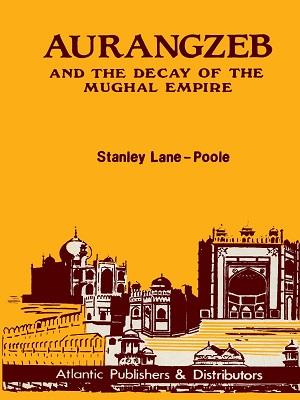
Aurangzib and the Decay of the Mughal Empire
Author :
Editor :
Publication year :
1980
Publish location :
London
Number of volumes :
1
Publisher :
Publish number :
First
(0 Votes)

(0 Votes)
Aurangzib and the Decay of the Mughal Empire
During the long reign of the last great Mughal emperor, how did military conquests, religious policies, and administrative efforts simultaneously bring the empire to its zenith while planting the seeds of its eventual decline?
About the Book
Aurangzib and the Decay of the Mughal Empire, authored by Stanley Lane-Poole and originally published in 1896 (reprinted 1980 by A Narcissus Publications), examines the reign of Aurangzeb (Aurangzib), the sixth Mughal emperor. The book portrays Aurangzeb as a capable administrator and general who expanded the empire to its greatest territorial extent, yet whose policies — including prolonged wars and a strict religious approach — contributed to its beginning decline. It covers his relations with the Marathas, his concept of kingship, interest in peasant welfare, and reputation for fair justice, drawing from both European travellers’ accounts and Persian chronicles. Lane-Poole describes Aurangzeb as wiser and more just than his father Shah Jahan, yet views his long reign as a “vast failure” that was nevertheless “grand.”
What You Will Discover
- Aurangzeb’s achievements as a prince, general, and administrator during the empire’s zenith
- The impact of his military campaigns and religious policies on the Mughal state
- His relations with the Marathas and other regional powers
- Aurangzeb’s interest in peasant welfare and administration of justice
- Assessments of his kingship compared to his predecessors
- The complex causes of the empire’s decay during and after his reign
- Insights drawn from European and Persian historical sources
About the Author
Stanley Lane-Poole was a British orientalist and historian known for his works on Islamic history and the Mughal Empire.
Who Is This Book For?
This book is suitable for students of South Asian and Mughal history, researchers interested in Aurangzeb’s reign, and readers seeking a classic account of one of the most significant periods in Indian history.