Contribution of Islam to Medicine
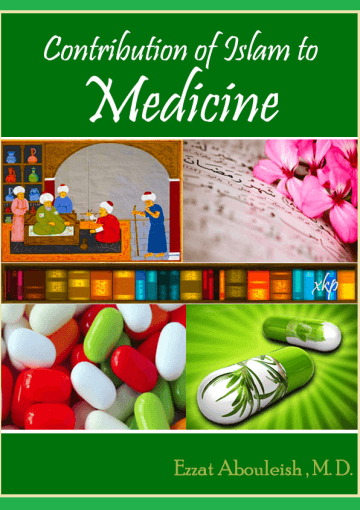
Contribution of Islam to Medicine
Author :
Number of volumes :
1
Publisher :
Publish number :
First
Publication year :
2007
(0 Votes)

(0 Votes)
Contribution of Islam to Medicine
Modern medicine did not emerge in isolation; it stands on centuries of accumulated knowledge, experimentation, and ethical reflection. Contribution of Islam to Medicine illuminates a critical yet often underrepresented chapter in the global history of medical science, demonstrating how Islamic civilization shaped the foundations of medical thought and practice.
About the Book Contribution of Islam to Medicine examines the profound role Muslim scholars played in preserving, developing, and transmitting medical knowledge from antiquity to the early modern world. Drawing upon Qur’anic principles, Prophetic teachings, and systematic scientific inquiry, the book shows how medicine in Islamic civilization evolved as both a rational science and a moral vocation.
The work highlights how Muslim physicians integrated empirical observation with ethical responsibility, viewing healing as a service to humanity and an act of devotion to God. Inspired by the teachings of the Prophet Muhammad (peace be upon him and his Family), medical practice emphasized compassion, accountability, and respect for human dignity. The book traces the development of hospitals, pharmacology, surgery, anatomy, and medical education within Islamic societies, illustrating how these achievements later influenced Europe and beyond.
Rather than presenting medicine as a purely technical discipline, the book situates it within a broader worldview in which knowledge (ʿilm, meaning divinely valued knowledge) serves both individual well-being and societal benefit.
What You Will Discover
- The Qur’anic and ethical foundations that encouraged scientific and medical inquiry in Islam.
- The role of Muslim physicians in preserving and expanding Greek, Persian, and Indian medical knowledge.
- The development of hospitals (bimaristans, public medical institutions) and organized medical training.
- Advances in pharmacology, surgery, diagnostics, and clinical observation.
- The moral framework governing medical practice, including patient rights and physician accountability.
- The transmission of Islamic medical knowledge to Europe and its impact on later medical progress.
About the Author The author is a researcher in Islamic intellectual and scientific history, with a particular focus on the interaction between faith, ethics, and empirical science. Through careful analysis of historical sources, the author presents Islamic medicine as a dynamic and principled tradition that contributed enduring insights to human health and healing.
Who Is This Book For? This book is for readers interested in the history of medicine, Islamic civilization, and the ethical foundations of scientific progress.