Islamic Etiquettes
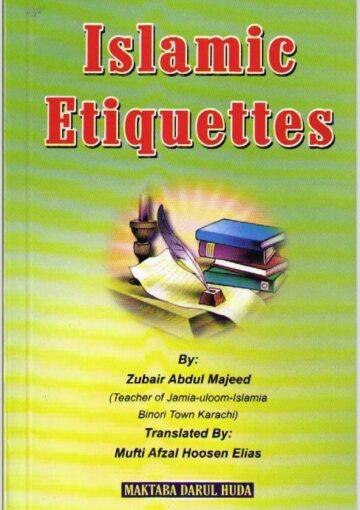
Islamic Etiquettes
Author :
Interpreter :
Publisher :
Publish location :
Pakistan
Publish number :
First
Publication year :
2009
Number of volumes :
1
(0 Votes)

(0 Votes)
Islamic Etiquettes
In a fast-paced world where manners and character often seem overlooked, how can the rich tradition of Islamic etiquettes help individuals develop into complete, lovable, and unified members of society?
About the Book
Islamic Etiquettes, written by Zubair Abdul Majeed and interpreted by Mufti Afzal Hoosen Elias, was published in 2009 by Maktaba Darul Huda in Pakistan. This booklet presents the vast array of beneficial etiquettes found in Islam that apply to people of all ages and genders. It explains that these manners are not superficial but form the core and objective of the Shari’ah. By adopting them, a person’s character is adorned, unity among Muslims is strengthened, and one develops into a complete and perfect Mu’min (believer). The work encourages readers to integrate these etiquettes fully into daily life for personal and communal benefit.
What You Will Discover
- The wide range of Islamic etiquettes that cover all aspects of personal and social life
- How these manners apply to people of every age, gender, and walk of life
- The role of etiquettes in developing a beautiful and lovable character
- Why Islamic manners are considered the core objective of the Shari’ah
- Practical ways to adopt etiquettes that foster unity and harmony among Muslims
- The connection between good manners and becoming a complete believer
- Benefits that extend to both individual spiritual growth and stronger communities
About the Author
Zubair Abdul Majeed is the author, with interpretation provided by Mufti Afzal Hoosen Elias. The work is published by Maktaba Darul Huda with the aim of encouraging practical adoption of Islamic manners.
Who Is This Book For?
This book is ideal for Muslims of all ages and backgrounds who wish to improve their character and manners according to Islamic teachings, as well as for families, educators, and community leaders focused on moral development.