Islamic Legal Maxims, Based on Al-Karkhi’s Al Usul
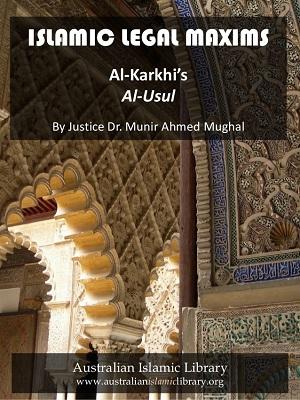
Islamic Legal Maxims, Based on Al-Karkhi’s Al Usul
Author :
Publisher :
Publication year :
1999
Number of volumes :
1
Publish number :
First
(0 Votes)
(0 Votes)
Islamic Legal Maxims, Based on Al-Karkhi’s Al Usul
Legal systems endure when their detailed rulings are anchored in coherent principles. Islamic Legal Maxims, Based on Al-Karkhi’s Al Usul examines foundational juridical maxims derived from the early Hanafi scholar al-Karkhi, demonstrating how concise principles generate wide-ranging legal conclusions across diverse cases.
About the Book Islamic Legal Maxims, Based on Al-Karkhi’s Al Usul explores the formulation and application of legal maxims (qawaʿid fiqhiyyah) attributed to al-Karkhi and later transmitted within Hanafi jurisprudence. The book explains how brief axiomatic statements function as interpretive tools, guiding jurists in resolving ambiguity and extending rulings to new situations. It situates these maxims within the broader methodology of usul al-fiqh (principles of jurisprudence), clarifying the relationship between textual evidence, analogical reasoning, and juristic discretion. Rather than treating maxims as abstract aphorisms, the work demonstrates their operational value in commercial law, personal status, worship, and procedural matters. By analyzing historical commentary and practical examples, the book shows how structured reasoning preserves doctrinal coherence while allowing contextual flexibility.
What You Will Discover
- The historical origins of al-Karkhi’s legal maxims within Hanafi thought.
- How concise principles guide complex juridical decision-making.
- The interaction between maxims, textual sources, and analogy.
- Practical examples illustrating application across legal domains.
- The role of maxims in maintaining coherence within legal tradition.
About the Author The author approaches the subject through classical jurisprudential scholarship, combining textual analysis with systematic explanation. The work reflects familiarity with Hanafi legal theory and its interpretive architecture.
Who Is This Book For? This book is for students of Islamic jurisprudence, Hanafi legal theory, and comparative legal methodology seeking a structured understanding of how maxims shape doctrinal reasoning.