Khums (The One – Fifth)
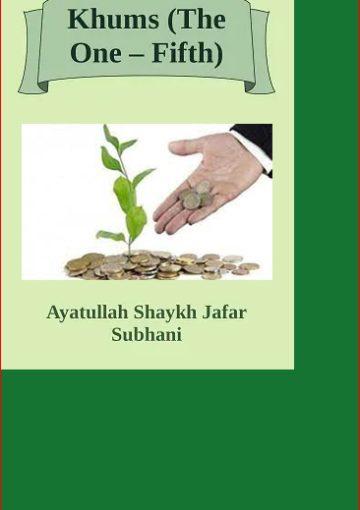
Khums (The One – Fifth)
Author :
Interpreter :
Publisher :
Publish location :
Qom - Iran
Number of volumes :
1
Publish number :
first
Publication year :
2006
(0 Votes)

(0 Votes)
Khums (The One – Fifth)
Among the financial obligations established in Islamic law, khums occupies a distinctive place within Islamic jurisprudence. Beyond its legal dimensions, khums reflects principles of social justice, communal responsibility, and the equitable distribution of wealth in support of religious and charitable causes.
About the Book
Khums (The One–Fifth) provides a comprehensive explanation of the Islamic institution of khums, examining its legal foundations, historical development, and practical application. The book explains the circumstances under which khums becomes obligatory and the principles governing its calculation and distribution.
The author discusses topics such as Qur'anic evidence, prophetic traditions, jurisprudential rulings, eligible forms of wealth, recipients of khums, differences among legal schools, and the social philosophy underlying this financial obligation. Readers gain a systematic understanding of one of Islam's important economic institutions.
A major emphasis throughout the work is that khums serves not merely as a financial duty but as an instrument for promoting justice, supporting religious institutions, assisting those entitled to receive it, and strengthening the Muslim community. Through detailed legal discussions and practical examples, the book clarifies common questions surrounding its implementation.
The discussion also highlights the ethical dimension of financial worship, demonstrating how generosity and obedience to divine guidance contribute to both personal spiritual growth and social welfare.
Comprehensive and practical, the book serves as a valuable reference on the jurisprudence of khums.
What You Will Discover
- The legal basis of khums.
- Wealth subject to khums.
- Rules governing calculation and payment.
- Distribution and eligible recipients.
- The social philosophy behind khums.
- Contemporary jurisprudential discussions.
Who Is This Book For?
This book is ideal for students of Islamic jurisprudence, educators, researchers, and Muslims seeking a clearer understanding of khums.