Science and civilization in Islam
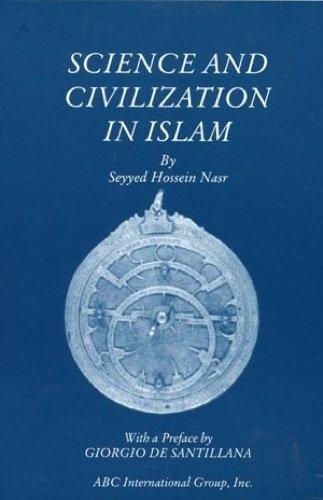
Science and civilization in Islam
Author :
Publisher :
Publication year :
2001
Number of volumes :
1
Publish number :
first
(0 Votes)

(0 Votes)
Science and civilization in Islam
The history of science in the Islamic world encompasses far more than the preservation and transmission of earlier scientific knowledge. It includes original intellectual traditions shaped by philosophical, religious, and cultural perspectives. Seyyed Hossein Nasr examines this history by presenting Islamic science as an integral dimension of Islamic civilization.
About the Book
Science and civilization in Islam by Seyyed Hossein Nasr provides a comprehensive historical and intellectual study of scientific traditions within Islamic civilization.
The work was originally published in 1968 and subsequently appeared in revised editions.
Nasr challenges approaches that treat Islamic science primarily as a preliminary stage in the development of modern Western science.
Instead, he examines scientific activity within the intellectual and cultural environment in which Muslim scholars developed their ideas.
The book combines historical explanation with an analysis of different scientific disciplines.
It also draws upon passages from the writings of Muslim scientists and philosophers, allowing readers to encounter important elements of the tradition through its original intellectual sources.
Nasr emphasizes the relationship between scientific investigation and the philosophical wisdom underlying Islamic intellectual life.
The opening chapter introduces the subject through principles associated with Islam.
Subsequent chapters examine cosmology, philosophy, theology, alchemy, physics, mathematics, astronomy, and medicine.
The book concludes with a discussion of the gnostic tradition, reflecting the author's interest in the relationship between scientific knowledge and spiritual understanding.
This broad range distinguishes the volume from histories concerned exclusively with technical discoveries or individual scientific achievements.
Nasr considers the intellectual context in which scientific disciplines were practiced and understood.
The edition described in the catalogue includes a new preface surveying developments in the relevant fields since the book's original publication.
It also provides a bibliographical supplement for readers interested in further research.
What You Will Discover
- The historical development of science within Islamic civilization.
- The relationship between Islamic science and philosophical wisdom.
- Contributions to mathematics, astronomy, medicine, and physics.
- The place of cosmology, theology, and alchemy in Islamic thought.
- Passages from classical Muslim scientists and philosophers.
- Nasr's interpretation of science as part of a wider intellectual tradition.
Who Is This Book For?
This book is suitable for historians of science, students of Islamic civilization, researchers in philosophy, and readers interested in medieval intellectual history. It is particularly valuable for understanding Islamic scientific traditions within their original cultural and religious contexts.