The Conception of the Sahaba's Ultimate Decency and the Political Authority in Islam
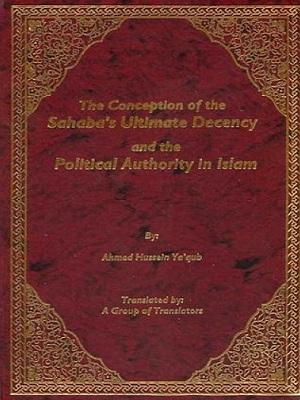
The Conception of the Sahaba's Ultimate Decency and the Political Authority in Islam
Author :
Editor :
Interpreter :
Publication year :
1999
Publish number :
First
Publish location :
Qum
Number of volumes :
-1
Publisher :
(0 Votes)
(0 Votes)
The Conception of the Sahaba's Ultimate Decency and the Political Authority in Islam
ebates over political legitimacy in early Islam were inseparable from questions about the moral standing of the first generation. The Conception of the Sahaba’s Ultimate Decency and the Political Authority in Islam explores how the doctrine of the collective integrity of the Prophet’s Companions became intertwined with later theories of governance and authority.
About the Book The Conception of the Sahaba’s Ultimate Decency and the Political Authority in Islam offers a sustained examination of the belief that the Sahaba possess an inherent and universal moral uprightness. The book traces the theological development of this conception and analyzes how it shaped interpretations of early Islamic history, including disputes over succession, leadership, and communal unity. By investigating the connection between sanctifying early figures and stabilizing political narratives, the work demonstrates how doctrinal commitments can influence legal reasoning, historical judgment, and models of obedience. The author argues that assumptions about moral infallibility are not neutral theological positions but carry significant implications for how authority is justified and dissent is framed.
What You Will Discover
- The origins and theological articulation of the doctrine of the Sahaba’s integrity.
- How this belief influences interpretations of early political conflicts.
- The relationship between moral presumption and political legitimacy.
- How doctrinal positions shape legal and historical methodologies.
- Broader implications for authority, obedience, and communal unity.
About the Author The author adopts a critical and analytical approach, engaging classical theological sources alongside political theory and historiography. The work avoids polemic and instead focuses on clarifying conceptual relationships between belief and power.
Who Is This Book For? This book is for students and scholars of Islamic theology, early Islamic history, and political thought who seek a deeper understanding of how doctrinal assumptions affect theories of authority and legitimacy.
Related Titles
The Saqifah Conspiracy
The Appropriate way to Await the Twelfth Imam
A Modern History of the Islamic World

Life as Politics: How Ordinary People Change the Middle East
Nuclear Fatwa Religion and Politics in Iran’s Proliferation Strategy
Imam Ali Bin Abi Taleb and Negotiations
Intellect in the Qur‟an and Islamic Civilization