Westernization and Human Welfare
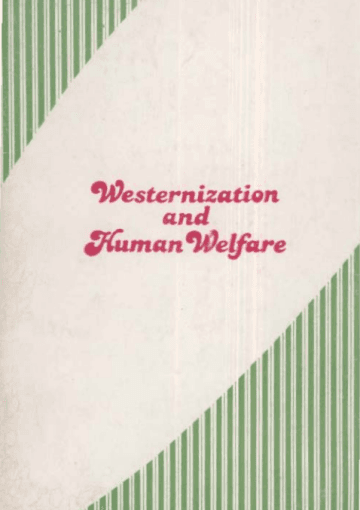
Westernization and Human Welfare
Author :
Publisher :
Publish number :
first
Publication year :
1982
Publish location :
Qasimjan Street , Delhi - India
Number of volumes :
1
(0 Votes)

(0 Votes)
Westernization and Human Welfare
Modernization is often equated with Westernization, and Westernization is frequently presented as the inevitable path toward human welfare. Westernization and Human Welfare critically examines this assumption and evaluates whether adoption of Western cultural and economic models necessarily guarantees genuine well-being.
About the Book
Westernization and Human Welfare analyzes the philosophical foundations of Western modernity and questions its universal applicability. The book distinguishes between technological advancement and cultural imitation, arguing that material progress does not automatically translate into moral or social welfare. Structured chapters explore themes such as consumerism, secular individualism, economic competition, and social fragmentation. The text evaluates how rapid Westernization may disrupt indigenous ethical systems and communal bonds. Rather than rejecting modern development, the book calls for critical engagement that preserves moral coherence. Analytical discussion highlights how welfare must be measured not only by income and infrastructure but also by stability, dignity, and social justice. Historical examples illustrate consequences of uncritical imitation. By integrating sociological observation with ethical reasoning, the work provides structured framework for evaluating cultural transformation.
What You Will Discover
- Distinction between modernization and Westernization
- Critical evaluation of consumer culture
- Moral dimensions of human welfare
- Social consequences of rapid cultural change
- Importance of preserving ethical foundations
- Structured analysis of development models
About the Author
The author approaches cultural transformation through social philosophy and ethical critique, presenting balanced and systematic evaluation.
Who Is This Book For?
This book is for students and readers interested in development studies, cultural analysis, and critical perspectives on modernization.