Al-Mizan An Exegesis of the Holy Qur’an - volume 1
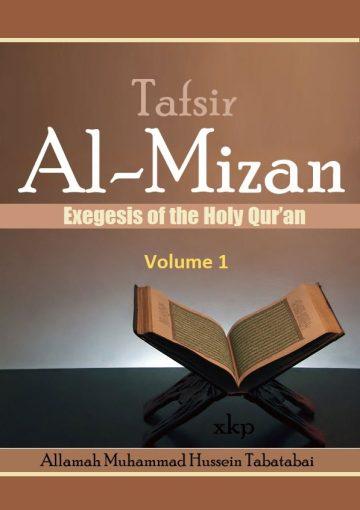
Al-Mizan An Exegesis of the Holy Qur’an - volume 1
Interpreter :
Publication year :
2007
Publish number :
First
Publish location :
Tehran, Iran
Number of volumes :
12
(1 Votes)

(1 Votes)
Al-Mizan An Exegesis of the Holy Qur’an - volume 1
The first English volume of al-Mīzān introduces the interpretive foundations of a major modern Qur’anic commentary. It examines the opening chapters of the Qur’an while addressing questions concerning divine guidance, human responsibility, creation, and the nature of revelation. Its importance lies in establishing both the methodology and theological framework developed throughout the larger work.
About the Book
Al-Mizan An Exegesis of the Holy Qur’an - volume 1 presents Sayyid Muḥammad Ḥusayn Ṭabāṭabāʾī’s introduction to his commentary, his interpretation of Surah al-Fātiḥah, and his explanation of Surah al-Baqarah, verses 1–93.
The English translation was prepared by Sayyid Saeed Akhtar Rizvi.
The introductory discussion examines different approaches to Qur’anic interpretation and explains the principle of interpreting the Qur’an through the Qur’an itself.
This method emphasizes the relationships between verses and the importance of allowing scriptural passages to clarify one another.
The commentary on Surah al-Fātiḥah explores divine praise, mercy, worship, and the request for guidance.
It also examines the significance of bismillāh, the opening invocation, and its connection with the chapter’s theological message.
The opening verses of Surah al-Baqarah distinguish believers, disbelievers, and hypocrites according to their responses to divine guidance.
A substantial section concerns the creation of Adam and his appointment as God’s representative on earth.
These passages introduce questions about human knowledge, responsibility, and the relationship between humanity and the angels.
The commentary also addresses the Qur’an’s miraculous character and the theological concept of intercession.
Later passages examine the history of the Children of Israel, including divine covenants, religious obligations, and episodes of disobedience.
Ṭabāṭabāʾī’s analysis combines textual interpretation with theological and philosophical discussions.
As the opening volume, the work establishes concepts and methods essential for understanding the subsequent parts of the commentary.
What You Will Discover
- The methodological foundations of interpreting the Qur’an through the Qur’an.
- The meanings of praise, mercy, worship, and guidance in Surah al-Fātiḥah.
- The characteristics of belief, disbelief, and hypocrisy.
- The creation of Adam and the significance of human responsibility.
- The miraculous nature of the Qur’an and the concept of intercession.
- The religious history and covenants of the Children of Israel.
Who Is This Book For?
This volume is suitable for students beginning a systematic study of al-Mīzān, researchers in Islamic theology, and scholars of Qur’anic interpretation. It is especially valuable for readers seeking to understand Ṭabāṭabāʾī’s methodology and the foundational theological questions addressed in the opening chapters of the Qur’an.