Islam and the earliest Muslims - Two Conflicting Portraits
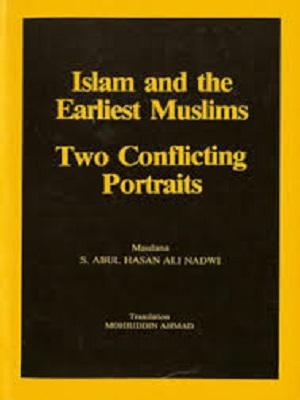
Islam and the earliest Muslims - Two Conflicting Portraits
Author :
Interpreter :
Publisher :
Publication year :
1985
Publish number :
First
Publish location :
India
(0 Votes)

(0 Votes)
Islam and the earliest Muslims - Two Conflicting Portraits
The earliest generations of Muslims occupy a central position in Islamic historical memory. Their experiences are frequently examined as examples of religious commitment, communal development, and the transmission of revelation. This book considers the formative period of Islam through an interpretation emphasizing divine guidance and the preservation of the Qur’an.
About the Book
Islam and the earliest Muslims - Two Conflicting Portraits by Abul Hasan Ali Hasani Nadwi presents a study of the earliest period of Islamic history.
The English version is associated with Mohiuddin Ahmad.
The work emphasizes the religious significance of the first Muslim community and the circumstances surrounding the preservation of the Qur’an.
According to its description, a central concern is the divine protection of the Qur’anic text from corruption.
This understanding is connected with the Islamic belief that the Qur’an constitutes God's final revelation for the guidance of humanity.
The book therefore approaches early Islamic history through a theological perspective.
The formative Muslim community is presented as an important setting for understanding the transmission of revelation and the establishment of religious life.
This period includes the mission of Prophet Muḥammad and the development of the community that accepted his teachings.
Its historical significance extends to the preservation, recitation, and transmission of the Qur’an.
The title also draws attention to the possibility of contrasting portrayals of the earliest Muslims.
Historical communities can be represented differently depending upon the sources, assumptions, and interpretive frameworks employed.
The book's description identifies its treatment as a sketch of an ideal early Islamic era.
That characterization is important because it indicates an evaluative approach rather than a purely descriptive chronological history.
The work's emphasis on an exemplary formative period reflects a broader tendency within Islamic religious literature to examine early Muslim experience for guidance concerning later religious life.
At the same time, responsible historical study requires distinguishing theological interpretation from independently established historical evidence.
The volume is therefore relevant both as a presentation of early Islamic ideals and as an example of how religious history can be understood through a particular interpretive perspective.
What You Will Discover
- A religious interpretation of the earliest Muslim community.
- The importance of the formative period of Islamic history.
- The theological significance of Qur’anic preservation.
- The Qur’an's position as the final revelation in Islamic belief.
- Questions concerning contrasting historical portrayals.
- The relationship between early Muslim experience and religious ideals.
Who Is This Book For?
This book is suitable for students of Islamic history, researchers in Muslim intellectual traditions, and readers interested in the first generations of Islam. It is particularly useful for examining how early Islamic history is interpreted through the themes of revelation, preservation, and exemplary religious conduct.