Mukhtasar Minhaj Al-Qasidin | Towards The Hereafter
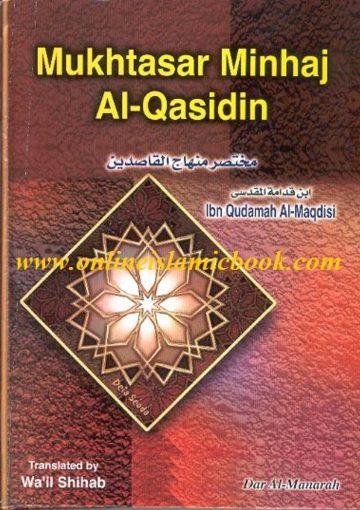
Mukhtasar Minhaj Al-Qasidin | Towards The Hereafter
Author :
Interpreter :
Publisher :
Publication year :
2002
Publish location :
Egypt
Number of volumes :
1
Publish number :
FIRST
(0 Votes)

(0 Votes)
Mukhtasar Minhaj Al-Qasidin | Towards The Hereafter
The pursuit of spiritual growth has occupied an important place in classical Islamic scholarship. Muslim scholars have examined how religious knowledge, worship, moral discipline, and the purification of character contribute to preparation for the life to come. This work belongs to that longstanding tradition of spiritual instruction.
About the Book
Mukhtasar Minhaj Al-Qasidin | Towards The Hereafter is associated with the classical Islamic work Mukhtaṣar Minhāj al-Qāṣidīn, an abridgment prepared by Ibn Qudāmah al-Maqdisī.
The text belongs to a tradition of religious writing concerned with the relationship between outward worship and inward spiritual development.
Its intellectual background includes earlier works on moral discipline and the purification of the soul.
The book addresses the importance of acquiring beneficial religious knowledge and translating that knowledge into practice.
Worship occupies a central position, but spiritual development is not limited to performing prescribed acts. The cultivation of sincerity, self-examination, and moral responsibility is equally significant.
Classical discussions of this kind examine how harmful habits and attachments can interfere with religious commitment.
They also emphasize the development of virtues that strengthen a believer's relationship with God and other people.
The title's reference to the Hereafter reflects the importance of accountability beyond earthly life.
Preparation for the Hereafter provides a framework for understanding the relationship between everyday conduct and ultimate spiritual objectives.
The work is therefore concerned with practical religious transformation rather than abstract theological discussion alone.
Its classical character makes it relevant to readers interested in the history of Islamic spirituality and moral education.
The precise contents and editorial features of the edition listed in the catalogue should be checked against the complete publication, particularly where abridgments and translations differ.
What You Will Discover
- Classical Islamic approaches to spiritual development.
- The relationship between religious knowledge and practice.
- The importance of sincerity in worship.
- Moral discipline and purification of character.
- The connection between daily conduct and accountability before God.
- Preparation for the Hereafter as a religious objective.
Who Is This Book For?
This book is suitable for readers interested in Islamic spirituality, students of classical religious literature, and educators concerned with moral development. It is particularly valuable for exploring how worship and ethical self-discipline are connected within traditional Islamic teaching.