Role of Islamic Scientists in the Advancement of Science
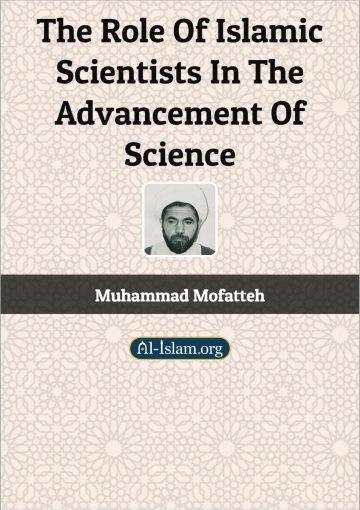
Role of Islamic Scientists in the Advancement of Science
Author :
Editor :
Interpreter :
Publisher :
Publication year :
2007
Publish number :
First
Publish location :
Tehran, Iran
Number of volumes :
1
(0 Votes)

(0 Votes)
Role of Islamic Scientists in the Advancement of Science
The history of science is incomplete without recognizing the profound contributions of Muslim scholars who shaped human knowledge across centuries. Role of Islamic Scientists in the Advancement of Science sheds light on a rich intellectual legacy that bridged faith, reason, and empirical inquiry.
About the Book Role of Islamic Scientists in the Advancement of Science explores the remarkable achievements of Muslim scholars during the classical Islamic civilization and their lasting impact on global scientific development. The book highlights how Islamic intellectual culture fostered rigorous investigation in fields such as mathematics, astronomy, medicine, chemistry, physics, and philosophy.
Grounded in the Qur’anic encouragement to observe and reflect upon creation, Muslim scientists viewed knowledge as a form of worship and service to humanity. The book emphasizes that scientific inquiry in Islam was never isolated from ethics or spirituality but was guided by moral responsibility and reverence for divine order.
What You Will Discover
- An overview of major Muslim scientists and their foundational contributions.
- The role of ʿilm (knowledge regarded as a sacred pursuit) in Islamic civilization.
- How Qur’anic values inspired observation, experimentation, and documentation.
- The development of scientific methods within Islamic scholarly traditions.
- The transmission of Islamic scientific knowledge to Europe and its influence on the Renaissance.
- The integration of faith, ethics, and reason in scientific advancement.
- Correcting common misconceptions about the relationship between Islam and science.
About the Author The author presents historical material with clarity and scholarly balance, drawing from classical sources and historical research. The narrative aims to restore recognition to overlooked contributors while demonstrating the intellectual vitality of Islamic civilization.
Who Is This Book For? This book is for students, educators, and general readers interested in the history of science, Islamic civilization, and the enduring role of Muslim scholars in shaping human knowledge.