The Despotic Rulers
The Despotic Rulers
Author :
Editor :
Interpreter :
Publisher :
Publication year :
1985
Publish number :
First
(0 Votes)

(0 Votes)
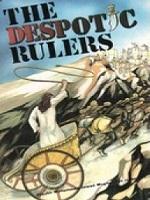
The Despotic Rulers
Throughout Islamic history, tyranny and the abuse of power have repeatedly threatened the moral, social, and spiritual well-being of the Muslim community. The Despotic Rulers examines this recurring phenomenon by exploring historical narratives that reveal how oppressive governance arises, how it harms society, and how faith-based resistance preserves justice and dignity.
About the Book The Despotic Rulers offers a critical exploration of leadership during turbulent periods of Islamic history. Drawing heavily from classical riwāyah (narrative transmission: preserved reports documenting historical events, statements, and moral lessons) and early chronicles, the book analyzes the conduct of unjust rulers whose actions contradicted the ethical foundations of Islam.
Rather than merely recounting events, the text investigates the spiritual and moral consequences of despotism—highlighting how the abandonment of justice, truth, and compassion leads to widespread corruption. It also underscores the role of righteous figures who stood as beacons of resistance, including the Imams of the Ahl al-Bayt, scholars, and ordinary believers who upheld integrity despite oppression.
What You Will Discover
- A historical overview of notable despotic rulers whose actions shaped key turning points in Islamic history.
- Insights from riwāyah (narrative transmission) documenting instances of injustice, corruption, and tyranny.
- Analyses of the social, ethical, and spiritual impacts of oppressive leadership on communities.
- Reflections on the contrast between illegitimate power and divinely guided leadership grounded in justice.
- Examples of courageous resistance demonstrated by prophets, Imams, scholars, and morally upright individuals.
- A thematic study of how societies deteriorate under tyranny and how they recover through truth and moral reform.
- Practical lessons for recognizing the signs of despotism and strengthening ethical conduct in personal and communal life.
About the Author Drawing from classical historical writings, narrational sources, and moral literature, the author presents a balanced yet powerful critique of unjust rule. The writing is accessible, well-structured, and firmly rooted in Islamic ethical principles, offering readers both historical understanding and moral reflection.
Who Is This Book For? This book is for readers seeking a historically grounded, morally insightful, and spiritually meaningful study of despotism in Islamic history and the timeless lessons it imparts about justice, leadership, and resistance.