The Rights of Non-Muslims in Islamic State
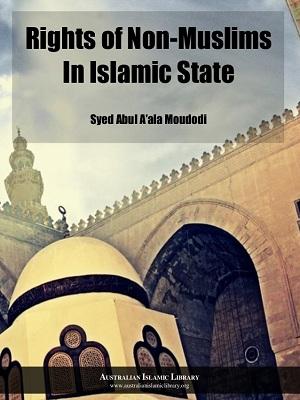
The Rights of Non-Muslims in Islamic State
Author :
Publisher :
Number of volumes :
1
Publish number :
first
Publication year :
2009
(0 Votes)

(0 Votes)
The Rights of Non-Muslims in Islamic State
How should a state governed by Islamic principles treat people who do not share the Muslim faith? This question is central to discussions of religious freedom, citizenship, justice, and the relationship between religion and political authority. Abul A'la Mawdudi's work examines the subject within his wider understanding of Islamic government.
About the Book
The Rights of Non-Muslims in Islamic State by Sayyid Abul A'la Mawdudi is a study concerned with the position of non-Muslim communities under an Islamic political system.
The catalogue identifies Islamic Publications as the publisher of the listed 2009 first edition.
Mawdudi was an influential twentieth-century South Asian Muslim thinker whose writings addressed Islamic political theory, religious law, and the organization of society.
His intellectual work frequently explored the relationship between divine sovereignty and the responsibilities of political institutions.
The question of non-Muslim rights is particularly important within this framework.
Classical Islamic jurisprudence developed various categories governing the status of non-Muslim populations living under Muslim political authority.
These discussions addressed legal protection, communal responsibilities, and the relationship between religious affiliation and political membership.
Modern debates have added questions concerning equal citizenship, constitutional rights, and international human rights standards.
Mawdudi's publication belongs to the broader tradition of Islamic political thought concerned with these issues.
Its title identifies the rights of non-Muslims as the central subject, but the catalogue provides no substantive description of the chapters.
Consequently, it would be inaccurate to attribute particular positions concerning taxation, public office, religious conversion, or political participation to this edition without examining the text.
The work should be approached as an expression of Mawdudi's political and legal thought rather than as a definitive statement of every Islamic school's position.
Its relevance lies in the continuing discussion about how religious principles relate to the rights of individuals and communities within a state.
What You Will Discover
- A study of non-Muslim rights within Islamic political thought.
- Questions concerning religious affiliation and legal status.
- The relationship between Islamic government and communal protection.
- Historical issues relevant to non-Muslim populations.
- A subject central to debates about citizenship and religious freedom.
- An entry point into Mawdudi's approach to Islamic political theory.
Who Is This Book For?
This book is suitable for students of Islamic political thought, researchers in religious law, and readers interested in minority rights and citizenship. It is particularly relevant to comparative studies of religious governance and the legal status of non-Muslim communities.